
By Josip Bogovic
The exploration of people who have reached the age of 90 and beyond reveals many common attributes: being active daily, a lean diet, belief in God or something greater than themselves, an engaging social life, and genetics. It has been scientifically proven that intermittent fasting (not eating for 12 hours) helps prolong life. In the early years of most of our longevians, food scarcity was common, largely due to social instability. A large part of Maria’s life consisted of unimaginable chaos, not of her or her family’s doing. We may reveal her strategy for remaining productive and sane amid the turbulence of war, famine, and other extreme tragedies. This may be an example of a completely selfless life, where you don’t live for yourself but for someone else. I’ve seen situations where people do not live for themselves or for others, children, etc., and that is a losing proposition. In life, one must hang on to something.
Maria Bogovic was born in January 1932 on the island of Krk, in the Dubasnica part of the island. Her large family consisted of eight siblings; the family lived an agricultural life. “When I was a young girl, we were all assigned a task to contribute to the family unit. We did not complain because it made sense to us that working was a normal activity. My father, Anton Kraljic, came to New York in 1905 on the ship Pannonia when he was 15, with his brother, who was 16. On some level, we understood the dynamics of our family history. There was little room for complaining and bickering. When I was approximately 12 years old, our immediate family was hit by an unimaginable evil force, the German Army. The Germans took away my father, brother Josip, sister Kate, and my other sister Marica. All of them were sent to the infamous concentration camps, Auschwitz and Dachau. Marica somehow managed to jump off the train and make it back wounded. The soldiers did many unspeakable, horrible things to us. Things were never quite the same after that; everything was out of sync and rhythm. My mom, Kate, somehow held it all together for us. I remember them saying that if it were not for the Americans coming to the rescue, they had only a few days of life left in them. I remember the numbers they had on their arms were dark blue. It is fair to say that their mental and physical health never recovered from the inflicted trauma. My brother became super cautious about everything; they took a lot of spirit and life energy out of my dad, sister, and brother. To make matters worse, my sister Marica was in the process of sewing a dress for her burial because she developed a septic condition and no one was able to save her. My baby brother, Pave, got burned with hot water and died a few days later. As a little girl, it was difficult to make sense of what was happening; everyone remained in a silent state of shock for several years. Things went from normal to very abnormal, and there was no one from outside to help. The experience of the concentration camp buried my father 30 years too early. Thinking about it years later, none of it made any sense except that people who look like us can be evil and dangerous,” said Maria with a sad look in her eyes.

Do you have issues with trusting people? “I suppose the answer is yes; it seems that one never quite gets over major tragedies. When I think about these tragedies, I get a good cry out of the memories and events. When I married my husband Josip, he, too, experienced the impact of war. He was a prisoner of the German Army, digging trenches for them on the Russian Front. I recall him saying that he was in a lower bunker when a bomb hit his shelter and blew to pieces the gentleman in a bunk bed above him. Upon his return from the war front, he was thrown in jail by Tito for refusing to work for free on road construction. It was because of these events that my husband wanted to get out of Europe, because there was always a war going on somewhere on the continent. We arrived in New York on Christmas Eve 1969 with three young children: the youngest daughter, Nada, was 1.5 years old; son Anton, 5; and Josip. My husband went to work right away. We were helped a little by my husband’s brothers, Ivan and Petar, and by Croatians we knew from the old country. You know how it is here, each family for themselves.”
Listening to the family history, I wondered how anyone can keep it together with prolonged trauma and adversity at just about every step.
“It was difficult to be separated from my siblings and mom when coming to America. I had no one from my own family, and we were close; I loved them all. I focused my attention on my children. I made sure they were fed good-quality Croatian meals every day. My occupation in Croatia was as a seamstress, designing clothes for my family. The boys were very active and out and about, so as a mom you constantly worry; it’s a big city with lots of different kinds of people, and I still worry about them. At the same time, we had to survive, so there was no time for thinking, only doing. I did have some luck; the kids were good and constructive, but then again, my husband did not tolerate destructive behavior. I recall him saying to my boys that if he caught them taking drugs, he would throw them down the 20-step stairwell located outside our apartment, and he meant it. My husband Josip was always laboring. I started working when my kids were a bit older, and I cleaned offices for a living in Manhattan. My husband, in his later years, had a terrible accident that left him blind. One more unforgettable tragedy; thus, I was mostly taking care of him for the next 10 years. A few years ago, my younger brother died in a farm tractor accident. In a way, I was the only lucky one in my family and the only one left standing, but when I think about it all, it’s more than overwhelming on all levels.
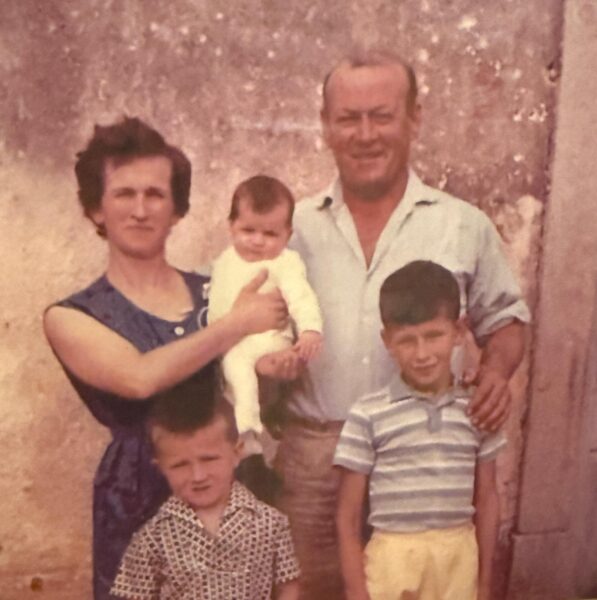
Why do you think you made it this far? “Well, it seems that God favored me. I immersed myself in making sure my children were okay, and my husband and I were supportive, paying for their education and helping them with down payments for buying homes. We are fortunate to have grandchildren, whom we enjoy. My entire life consisted of being active, constantly on the move, and gardening. For a time, the only show I watched on Sundays was The Red Skelton Show for an hour, years ago. I have to say that in my entire life, I did not have a high-calorie intake; my body did not ask, so I just listened. I was never overweight and never went to a hospital except when giving birth. I had lots of friends call me during the week, and that was nice and a bit therapeutic — Tonka Grgas, Marica Vucetic, Tonica Kraljic, and so on. I miss Tonka and Tonica; they passed too early. I always liked to send little presents to people, especially to friends and family in Croatia, which makes me happy and is a way to compensate for not being with them.”
There is so much to say about Maria Bogovic, especially as her son is writing this article. First and foremost, the greatest force in the entire infinite universe is to be loved and supported consistently over all these years by selfless parents, always placing their children before themselves. I have been fortunate to have parents of that caliber and disposition. In turn, I have experienced the greatest love of all, and it did happen to me/us. For me, it is the most profound experience I could ever have in this infinite universe, to feel and be aware of that fact. It leaves me speechless, completely fulfilled. My parents never said no to us when asking for something constructive. They were generous to our friends, letting some live in our basement free of charge. They did not want to raise tenants’ rent because they felt people were overwhelmed with bills. These actions left a permanent impression on me, which I treasure and carry forward in my life.
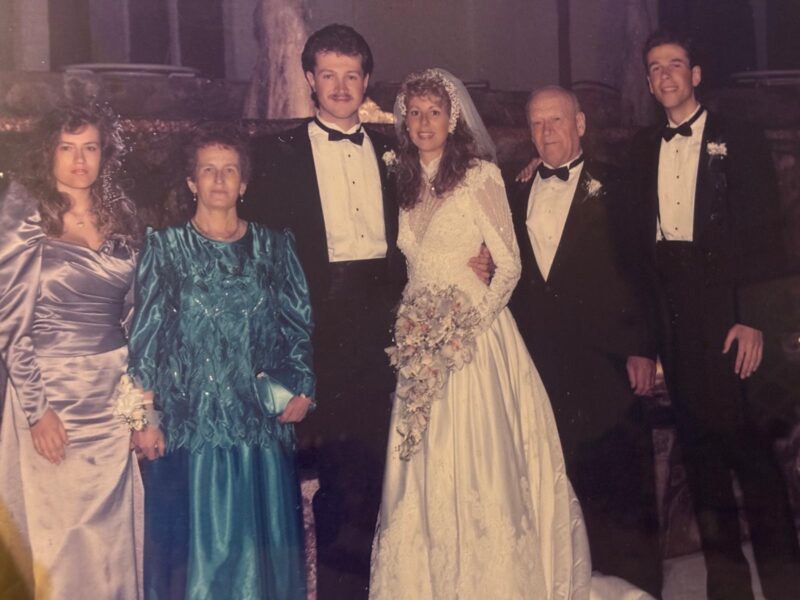
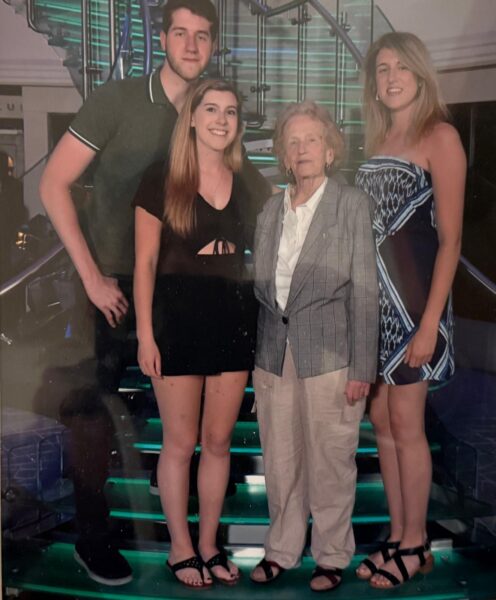
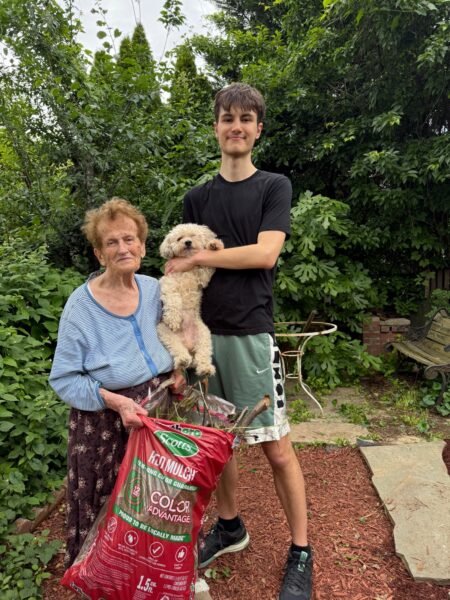
There is a downside to this, of course, and that is I wish my parents had much more pleasure in their lives – more vacations, downtime, etc. I wish they nurtured themselves more. Perhaps this story is about doing too much for others and not enough for yourself, a little tragedy of its own. A year ago, I used to say to people when they asked about my mother: “She still cooks and saves money for us.” Though my mom is mobile and in good health, about six months ago we simultaneously realized a change in her short-term memory. As we locked eyes on that realization, we had a mutual cry that was as powerful for me as an explosion of a distant sun. For the first time in her life, she said, “I think I will be needing your help!” It only took 93.5 years for that utterance. Of course, we made it a point to help with pleasure. It is true what they say: when you come full circle, you return to childhood memories, tastes, wishes, and behavioral patterns. I’m super happy I/we can give back a few percent of what I/we have received.
As Mišo Kovač put it best in a song she loved titled Najljepše su oči moje majke, the lyrics go as such: in my mother’s eyes there is always peace, warm words when she’s silent; in her eyes there is me when she’s sleeping and thinking; in her eyes love is always present and I’m never alone. When she’s hiding her tears or laughing, I know that the most beautiful eyes are those of my mother. I agree. I/we love you, Mom, forever and into the infinite. We are so fortunate to be loved and nurtured by you throughout these years. Dad is guarding us from the heavens — of these things I am certain.
Listen to Croatians Online here:
Croatian American Media Association Corp is a tax exempt organization under Section 501 c(3) of the Internal Revenue Code (EIN # 99-1591741). Your donation is greatly appreciated and will be used to support our mission. Your contribution is tax deductible to the full extent permitted by law.