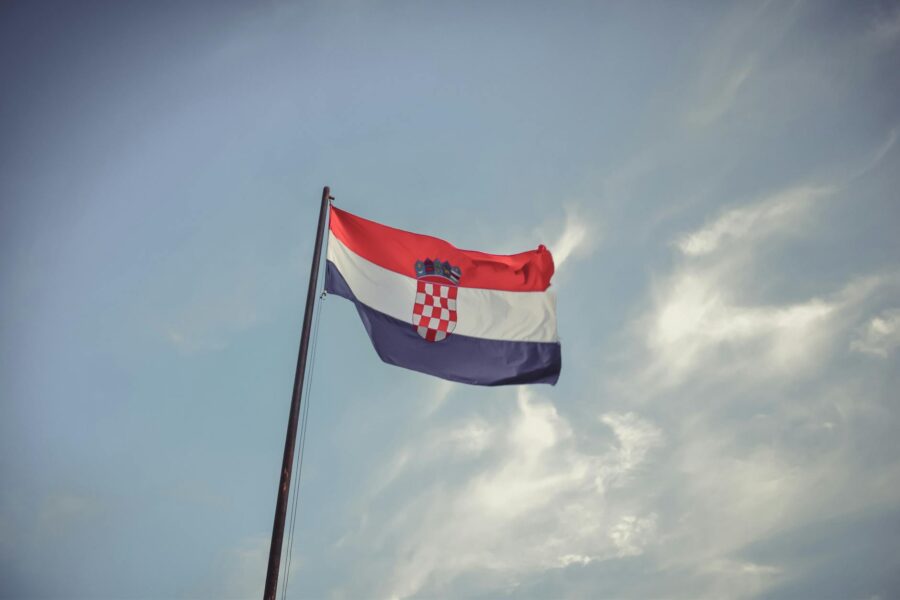
Dan drzavnosti or Statehood Day, observed on May 30, is the national holiday that serves as a powerful reminder of the price of freedom won through sacrifice, democratic ideals, and determination through peaceful measures despite the dangerous consequences that the Croatian people acknowledged. It is not merely a public holiday from work or school, but a commemoration of Croatia’s establishment of a democratic system through free, multiparty elections – an achievement that paved the way for the 1991 declaration of independence from communist Yugoslavia, paving way for a long-awaited dream of national autonomy that the Croatian people had pursued since the days of the Austro-Hungarian Empire.
It’s a story of resistance, pursuit of freedom, and valor in the face of communism and greater Serbian centralization within a one-party system- one that parallels to the United States’ fight for independence 250 years ago.
Setting the path for independence:
In January 1990, the League of Communists in Belgrade during the 14th Congress imposed policies for greater centralization and unitarianism against the Yugoslav republics, and immediately failed after Croat and Slovene delegates walked out of the congress. This eventually led to the end of the League of Communist of Yugoslavia, and the introduction of multi-party systems in the Yugoslav republics by freely elected officials.
Democratization began within the Socialist Republic of Croatia to convene legislative changes to legalize new political parties and carry out multi-party elections by secret ballot following the April and May elections. Despite attempts by Greater Serbian rallies and indictments led by Slobodan Milošević to curb democratization, Croatia maintained a free multi-party election. On May 30, 1990, the Croatian Democratic Union (HDZ) led by Franjo Tudjman won the election to be the first president of the Socialist Republic of Croatia and the constituents of the newly formed multi-party Parliament (Sabor) was assembled.
The new Sabor was formed by the democratically elected multi-party system with Franjo Tudjman as president of SR Croatia, the speaker of the Sabor, Žarko Domljan, and Stjepan Mesić as Prime Minister of the Executive Council of the Sabor.
HDZ’s campaign was based on the anti-communist mood from the majority of Croats on the awakened national enthusiasm to protect Croatian national sovereignty and resist against greater Serbian centralization that had dominated over Kosovo and the other Yugoslav republics since the mid-1980s.
“I never doubted that the people would demonstrate their maturity at the polls. I am certain they will know how to build a life worthy of free people in their one and only, long-suffering, yet sacred homeland,” said President Tudjman during his inaugural address at St. Mark’s Square in Zagreb.
Severing the chains of tyranny and declaring independence:
The Yugoslavian military responded with aggression by seizing nearly all weapon stockpiles of the Croatian Territorial Defense by an agreement by Milošević and illegally ordered by Yugoslav generals to disarm the Croatian forces. Despite aggression by Serbian leadership and insurgencies in the Croatian Krajina regions, Tudjman’s leadership continued the process of peaceful implementation by severing ties with the Socialist Yugoslav Federation dominated by Milošević.
Croatian sovereignty was secured through a referendum on May 19, 1991, where 93.2% of citizens voted in favor, and on May 23, Tudjman declared the Republic of Croatia as a sovereign and independent state guaranteeing cultural autonomy, and that it will no longer be an internal federal state within Yugoslavia. On June 25, 1991, the Sabor enacted the Constitutional decision on the Sovereignty and Independence of the Republic of Croatia. On the same day, Slovenia also proclaimed independence and both nations sought recognition from the European community.
First Speaker of the Sabor, Žarko Domljan famously stated in this historical session in the Sabor. “The State of Croatia is born; may she live long and happily!”
The proclamation established the statehood of the Republic of Croatia; however, it was not the declaration of Croatia as a new country, but a revival of its independence that has existed since the 9th century and evolution into a democratic modern nation.
The following evening after the Sabor’s decision to proclaim independence along with Slovenia recognizing it on June 26, Serbian rebels armed by the Yugoslavian National Army (JNA) in the Krajina region launched an attack on the police station in Glina and on Croatian Territorial Forces and settlements with the aim to expel the Croats in Banovina area.
This led to the signing of the Brioni Agreement on July 7, 1991, on the Brijuni Islands in Croatia where Croatia, Slovenia, and Yugoslavia agreed to cease hostilities in Slovenia through a peaceful resolution to resolve the Yugoslav internal conflicts. However, this did not prevent further Serbian aggression against Croatia which continued in a full-blown war throughout the Balkans with military invasions and terrorist attacks against Croat civilians carried by the JNA forces in Serbia and Montenegro that continued until the end of the war through the Dayton Peace Accords in 1995.
How Croatian Americans celebrate Statehood Day:
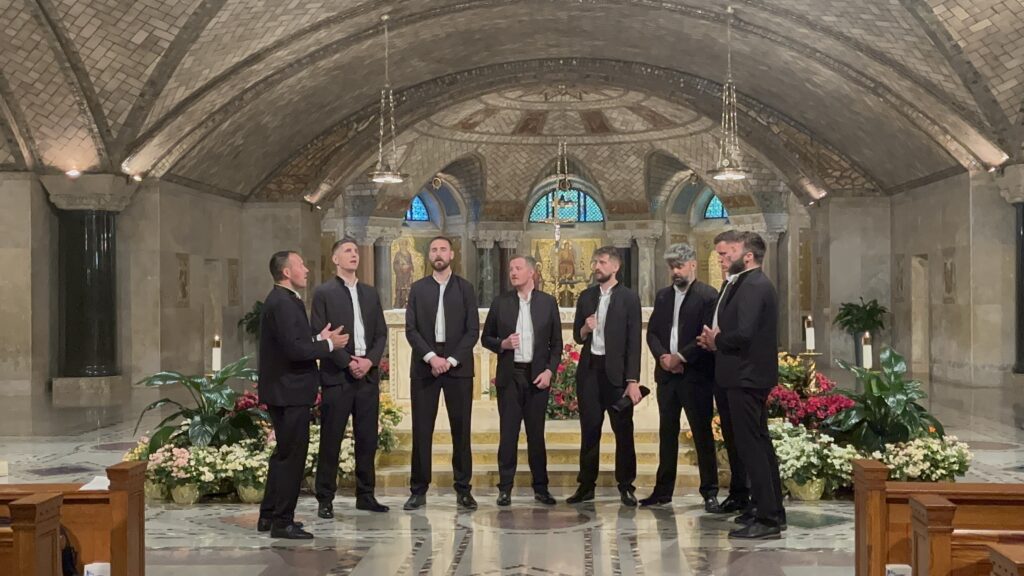
Croatian Statehood Day remains an integral part of Croatian communities outside of the Republic of Croatia. On May 31, a holy mass was organized by the Croatian Catholic Mission of St. Blaise that dedicated the mass to the Solemnity of the Holy Trinity and the Croatian homeland at the Basilica of the National Shrine of the Immaculate Conception in Washington DC. The mass marked the final event for the Croatian Statehood Day program for the Embassy of Croatia in Washington DC and featured Dalmatian klapa group, Klapa Bošket, to perform songs like Ljepa Naša Domovina (Our Beautiful Homeland) and various religious, traditional, and newer Dalmatian songs.
Masses and gatherings like this demonstrate the resilience of Croatians despite insurmountable odds and commitment to preserving Croatian heritage and language. Although the United States does not recognize Croatian Statehood Day as a national holiday, it’s still considered a day of observance for Croatia’s struggles for independence, reflection of the lives lost during the bloody war for independence, and call for unity among all Croats in the diaspora to reflect on Croatia’s 1100 year journey to establish and maintain an independent modern nation.
Listen to Croatians Online here:
Croatian American Media Association Corp is a tax exempt organization under Section 501 c(3) of the Internal Revenue Code (EIN # 99-1591741). Your donation is greatly appreciated and will be used to support our mission. Your contribution is tax deductible to the full extent permitted by law.