
Exclusive Interview | Professor H. David Rosenbloom reveals how one senator can delay international tax treaties, why American business interests matter, and what could finally move the agreement forward.
Nearly four years after the United States and Croatia signed their first comprehensive income tax treaty, the agreement remains stalled in Washington. Croatia has completed its domestic approval process, and the treaty has finally reached the U.S. Senate. Yet the question remains: When will it actually take effect? To understand what is happening behind the scenes, Croatians Online visited New York University School of Law for an exclusive interview with Professor H. David Rosenbloom, one of America’s most experienced international tax law experts.
Rosenbloom is a former International Tax Counsel at the U.S. Treasury Department and served for 23 years as Director of the International Tax Program at NYU School of Law. During his career, he negotiated numerous international tax treaties, including the treaty with Canada, and represented the United States at the OECD. His assessment of the possibility of Senate approval before the end of 2026 was not encouraging. “I just can’t imagine that could happen,” Rosenbloom told Croatians Online.
Why Is the Treaty Still Waiting?
The United States and Croatia signed their income tax treaty on December 7, 2022. An additional protocol was signed in Dubrovnik on April 28, 2026, and the treaty and protocol were transmitted to the U.S. Senate on September 14, 2026. Croatia has already completed its domestic approval process. However, the treaty cannot enter into force until the remaining U.S. procedures are completed and the required diplomatic steps take place.
According to Rosenbloom, the delay is not particularly surprising. After reviewing the original treaty, he found it closely aligned with the U.S. Model Income Tax Convention, with relatively few unusual provisions.The difficulty, he explained, lies primarily in the Senate’s treaty approval process.
Cijeli razgovor potražite u našoj emisiji Croatians Saturday LIVE:
How Can One Senator Delay an International Agreement?
One of the central obstacles is Republican Senator Rand Paul, who has repeatedly raised objections to international tax treaty provisions involving the exchange of taxpayer information. Rosenbloom explained that tax treaties are negotiated by the executive branch, primarily through the Treasury Department, and then submitted to the Senate Foreign Relations Committee.
The committee typically reviews treaties, holds hearings, and prepares reports before sending them to the full Senate. Under the U.S. Constitution, the Senate must provide its advice and consent by a two-thirds vote of senators present before the United States can proceed with ratification. However, tax treaties have traditionally been approved through a faster procedure requiring unanimous consent. “Senator Paul has withheld his consent,” Rosenbloom explained. Without unanimous consent, the Senate must devote substantially more legislative time to considering a treaty.
According to Rosenbloom, senators are generally reluctant to spend an entire legislative day debating technical tax agreements that attract little public attention. He also questioned Paul’s privacy objections. While Senator Paul has expressed concerns about governments exchanging taxpayer information, Rosenbloom argued that the IRS already has extensive access to financial information within the United States. Why, he asked, should American tax authorities have less access to information about American taxpayers abroad? “He’s never been very clear about what exactly his problem is,” Rosenbloom said. Paul’s objections do not amount to an absolute veto, but they can prevent treaties from advancing through the usual expedited process.
Could the Croatian Treaty Signal a New Direction in U.S. Tax Policy
One of the most interesting observations from the interview concerned the treaty itself. Rosenbloom believes the United States may be using its agreement with Croatia to indicate the direction of future American international tax treaty policy. “My sense is that the United States has used the treaty with Croatia as a means of getting out to the public its anticipated change in U.S. treaty policy,” he explained.
According to Rosenbloom, the original agreement follows the U.S. Model Treaty closely. However, the additional protocol introduces provisions that could have broader implications for future agreements. He expressed concern about incorporating detailed provisions of the U.S. Internal Revenue Code directly into international treaties. In his view, this could complicate future negotiations because foreign governments are familiar with the OECD and U.S. model treaties but may not fully understand the complexities of American domestic tax legislation. The Croatian agreement, therefore, could have significance beyond the bilateral relationship between the two countries.
American Investment and the Power of Business Interests
During the interview, we also discussed the additional protocol signed in Dubrovnik and the broader American investment initiatives associated with that period, including the proposed Project Pantheon data center. Could these economic developments help move the treaty forward? Rosenbloom did not claim any direct connection between the Dubrovnik investment discussions and the treaty’s progress. However, he emphasized that major business interests have historically played an important role in advancing international tax agreements. “The treaties get brought forward when industry gets behind them,” he said.
He referred to the U.S.–Spain tax protocol as an example where, in his recollection, substantial investment interests helped generate political support. Rosenbloom also emphasized that tax treaties are more than diplomatic gestures. Unlike agreements that primarily express goodwill, tax treaties directly affect financial obligations, withholding taxes, investment returns, and cross-border business operations. “Tax treaties have real consequences,” he explained. For Croatian Americans and businesses operating between the two countries, these consequences can be significant.
Can Croatian Americans Help Move the Treaty Forward?
We also discussed whether Croatian-American organizations, business associations, diplomatic representatives, and members of Congress could help accelerate the ratification process. In October 2026, five members of the bipartisan Congressional Croatian Caucus—Representatives Dave Joyce, Nanette Barragán, Claudia Tenney, Ted Lieu, and Chris Deluzio—urged the Senate Foreign Relations Committee to advance the treaty. The efforts of U.S. Ambassador to Croatia Nicole McGraw and the American business community were also raised during our conversation.
Rosenbloom suggested that American corporations with substantial business interests in Croatia could play a particularly important role. “It would really help if you had U.S. business with a substantial presence in Croatia,” he said. He specifically mentioned the National Foreign Trade Council (NFTC) and the United States Council for International Business (USCIB) as organizations worth contacting. Both represent American multinational business interests and participate in international economic policy discussions. Rosenbloom believes that advocacy originating within the United States and directed toward American senators could be especially useful. At the same time, he acknowledged that companies are often reluctant to spend political capital on tax treaties, even when those agreements could benefit them.
Does It Matter Which Political Party Controls Washington?
Another question was whether changes in political leadership could affect the treaty’s future. Rosenbloom does not believe that international tax treaties are generally driven by partisan politics. “Treaties tend not to be political,” he said. In his view, the greater problem is that tax treaties compete with numerous other legislative priorities and rarely attract enough political attention to move quickly through the Senate. Croatia is not the only country waiting.
Rosenbloom mentioned other treaty negotiations and agreements involving Vietnam and Norway, as well as the need for an updated agreement with Israel. Some treaty processes have lasted considerably longer than Croatia’s. When reminded that Croatia has been waiting nearly four years, Rosenbloom noted that this was, unfortunately, a relatively short period compared with certain other cases.
Could the Treaty Take Effect in 2027?
For Croatian Americans, retirees, entrepreneurs, investors, and individuals earning income in both countries, the most important question remains when the treaty will become effective. The agreement could reduce certain withholding taxes, clarify the treatment of pensions and business income, and provide mechanisms for avoiding double taxation. However, Rosenbloom expressed serious doubts that the Senate would complete the necessary steps before the end of 2026.
“I just can’t imagine that could happen,” he said, pointing to the limited number of legislative days remaining in the year. When asked about 2027, his response was more cautious. “Who knows?” He noted that changes in U.S. international tax treaty policy remain possible. Rosenbloom also believes that the considerable attention devoted to global tax reform initiatives, particularly the OECD’s Pillar One and Pillar Two projects, has distracted policymakers from traditional bilateral tax treaties. He expressed skepticism about attempts to fundamentally redesign the international tax system, arguing that established tax principles can often be adapted to modern economic and technological developments.
What Happens Next?
Croatia has completed its domestic approval process. Members of the Congressional Croatian Caucus have publicly urged the Senate to move forward, and American diplomatic and business representatives have opportunities to support the agreement. Yet the treaty remains pending in Washington. Rosenbloom’s experience suggests that the delay may have less to do with the substance of the agreement or the relationship between Croatia and the United States than with the realities of the American legislative process. His most practical observation was that meaningful progress often requires the active involvement of American businesses.
For the Croatian-American community, that raises an important question: Can stronger cooperation among businesses, community organizations, and diplomatic representatives help bring the treaty to the Senate’s attention? For now, the timeline remains uncertain. As Rosenbloom put it when asked whether 2027 might finally bring progress: “Who knows?” To hear Professor Rosenbloom’s full insights and analysis, watch our exclusive interview on the Croatians Online YouTube channel.
Latest Posts
Stay updated with our recent articles and insights.
 Croatians Saturday Live
Dvoje hrvatskih onkologa iz SAD-a o liječenju raka: “Napredak je velik, ali simptome ne smijemo ignorirati”
Od leukemije koja se prije nekoliko desetljeća kod mnogih starijih pacijenata gotovo nije ni liječila do terapija koje danas koriste
 Croatians Saturday Live
Why Is the U.S.-Croatia Tax Treaty Taking So Long? H. David Rosenbloom Explains
Exclusive Interview | Professor H. David Rosenbloom reveals how one senator can delay international tax treaties, why American business interests
 Događanja
Rasprodan koncert hrvatske glazbe u New Yorku: Neki su je čuli prvi put i odmah pitali kada će biti sljedeći
Hrvatska glazba prošle je nedjelje ispunila The Castle u njujorškom Queensu, gdje je u sklopu Passport Concert Seriesa Bayside Historical
 Sport
HRVATSKA NA PUTU PREMA IRSKOJ: Dva susreta koja će odrediti sudbinu Vatrenih u Ligi nacija
Hrvatska nogometna reprezentacija saznala je ime protivnika u jednoj od najvažnijih utakmica svojeg reprezentativnog ciklusa. Ždrijeb u Nyonu spojio je
 Croatians Saturday Live
: Movember, Alen Žunić i porezni ugovor Hrvatske i SAD-a
Razgovori s onkolozima dr. Ivanom Gojo i dr. Leom Lužnikom, arhitektom Alenom Žunićem te stručnjakom za međunarodno oporezivanje prof. H.
 Trending
Alen Žunić: “Hrvatskim gradovima nedostaje vizija, danas plaćamo cijenu stihijskog razvoja”
Od Zagreba i Harvarda do Princetona i istraživanja gradova budućnosti, vlastitog projektnog studija i suradnje sa svjetskim imenima arhitekture. Hrvatski
 Kultura
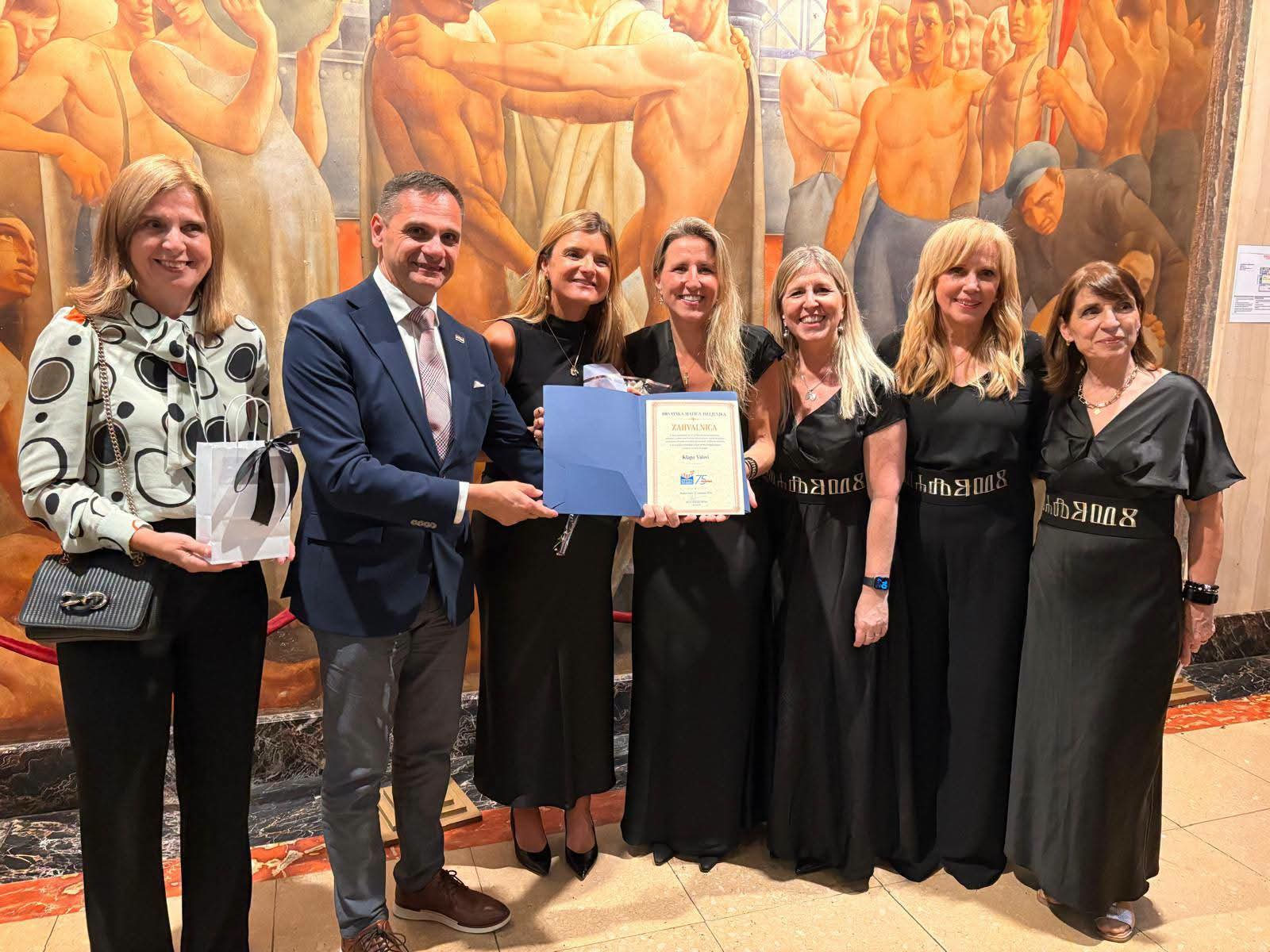
Dalmatinska pisma u srcu Buenos Airesa – Klapa Valovi proslavila obljetnicu koncertom
Slavljeničkim koncertom hrvatska ženska Klapa Valovi iz Argentine proslavila je 25 godina čuvanja hrvatske pjesme u Latinskoj Americi. Obljetnički koncert
 Trending
Film Dominika Sedlara “Vindicta” dobio američkog distributera, kinoizlazak planiran početkom 2027.
Well Go USA Entertainment otkupio je prava za američko tržište na ratnu dramu o mladoj ženi koja nakon ubojstva roditelja
 Biznis
Veliko priznanje za hrvatski Sofascore: Google Play proglasio ga najboljim za sportske navijače u SAD-u
Platforma pokrenuta u Zagrebu osvojila je nagradu u sklopu izbora Google Play Best of 2026., nakon godine u kojoj je
 Trending
Vukovar, 35 godina poslije: Sjećanje koje povezuje Hrvatsku i iseljeništvo
Na Dan sjećanja na žrtve Domovinskog rata i Dan sjećanja na žrtvu Vukovara i Škabrnje odajemo počast poginulima i nestalima
 Trending
Reconnect with your roots through higher education: Join RIT Croatia’s Online Diaspora Info Session
For generations, families across the global Croatian diaspora have passed down a deep love for their heritage, language, and culture.
 Kultura
Mirena Bagur Amerikancima približila Martinje: „Ideja je bila povezati moje dvije zemlje”
Masterclass Croatian Premium Winea spojio je kušanje vina s pričama o hrvatskim običajima, gastronomiji i obiteljima koje stoje iza vinskih
Listen to Croatians Online here:
Croatian American Media Association Corp is a tax exempt organization under Section 501 c(3) of the Internal Revenue Code (EIN # 99-1591741). Your donation is greatly appreciated and will be used to support our mission. Your contribution is tax deductible to the full extent permitted by law.